
AI summary
Multimodality turns AI into a campaign engine, not just a content generation tool. Working across text, visuals, video, and audio, it increases asset variety and opens up more room for creative storytelling. Paired with brand governance, multimodality boosts multiformat production without the brand risk.
Multimodal AI combines text, image, video, and audio to create multiple content types at the same time, supporting enterprise multi-channel campaigns. Examples of multimodal generation:
A video with voice-over from a written script
A blog with a matching header image
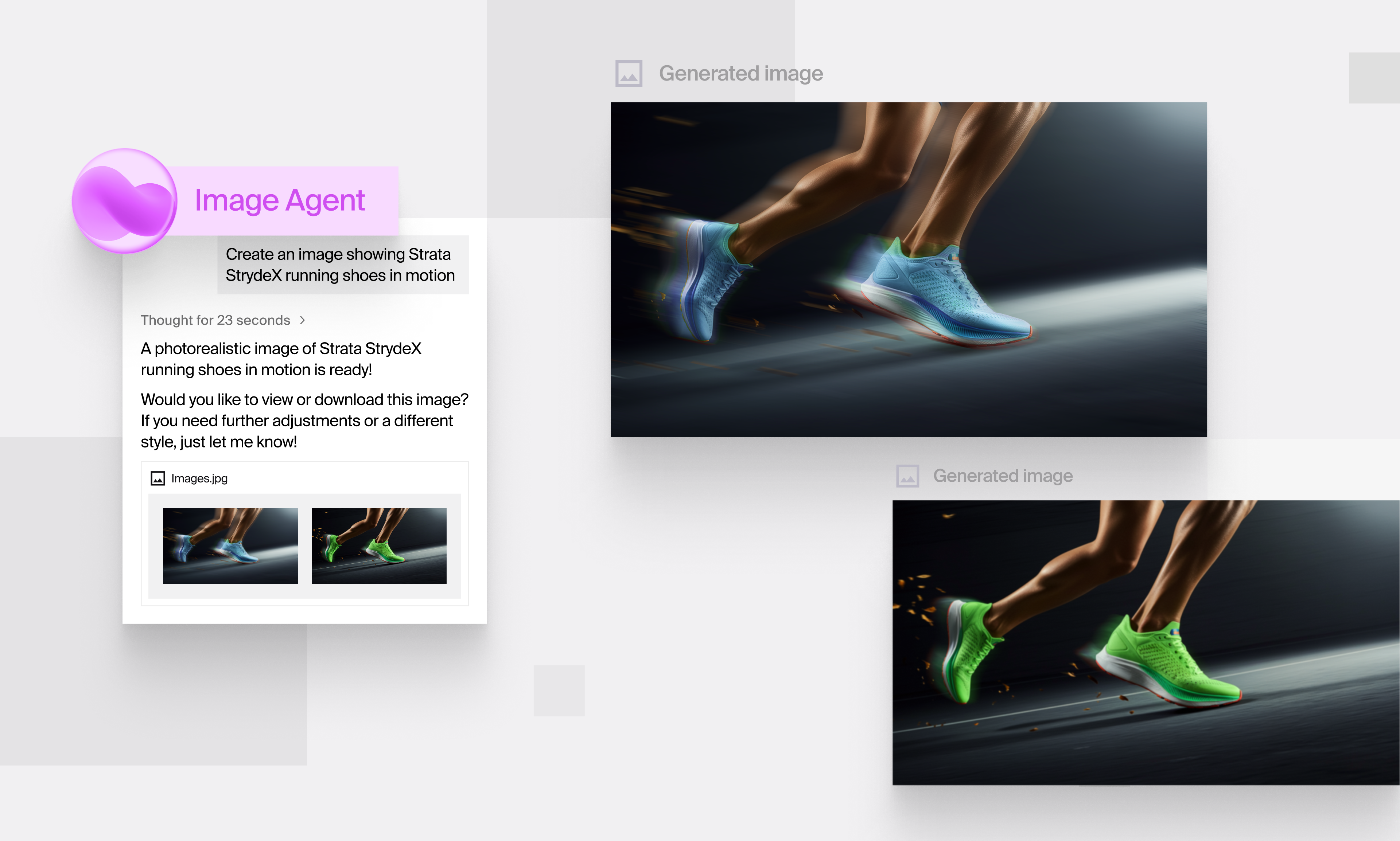
An image from a text prompt
A LinkedIn post, a video, banner ads, and ten CTAs from a strategy brief, user persona doc, and a PPT containing links to reference blogs, videos, and infographics.
Rich, relevant inputs helps multimodal AI generate higher-quality outputs.
Multimodal workflows are governed, meaning your brand and legal guidelines are applied during content generation. Every asset in a campaign follows your editorial and visual standards, as well as your industry’s legal and disclosure requirements.
How does multimodal content generation work?
It starts with a multimodal AI marketing platform. Under the hood, the platform has AI agents specializing in distinct modalities creating multi-format campaign assets. They respond to your prompt (a simple, natural language command like “Promote our latest cyber insurance product”) and use contextual inputs. These inputs are:
Your brand source of truth: Approved company facts, messaging and voice guidelines, vector logos, color palettes, guardrails (banned words, legal disclaimers, font rules), web, ad, and email layouts, script outlines, strategy briefs, and persona docs, to name some.
Your source of truth is permanently locked-in and you needn’t include it each time you create content. It becomes the platform’s intelligence layer and leads to real-time-governed workflows.
Grounding content: Campaign-level reference sources like case studies, landing pages, blogs, videos, webinars, data sheets, customer testimonials, and anything not in your existing source of truth. Agents use these materials to create highly-specific campaign assets.
How does Typeface's multimodal AI marketing platform work?
Typeface’s governed, multimodal workflows scale content safely across sub-brands, product lines, and regional markets. Whether you’re looking to create a banner ad in under a minute or refresh hundreds of assets yearly with minimal effort, our AI marketing platform gets the job done without creating a new content management bottleneck. Here’s how:
A knowledge graph keeps campaigns on-brand
Speed means little if multimodal AI generates off-brand assets. LinkedIn posts that don’t follow your product naming conventions or localized image variations that break from your core style become liabilities at scale.
This doesn’t happen in Typeface because our knowledge graph Arc Graph ensures that AI agents create content within guardrails. It’s what feeds the brand source of truth we mentioned earlier to agents, ensuring everything they create remains compliant. Our Brand Agent runs a second level of brand checks, flagging deviations and suggesting fixes.
Specialist AI agents each handle the part of the task they’re built for
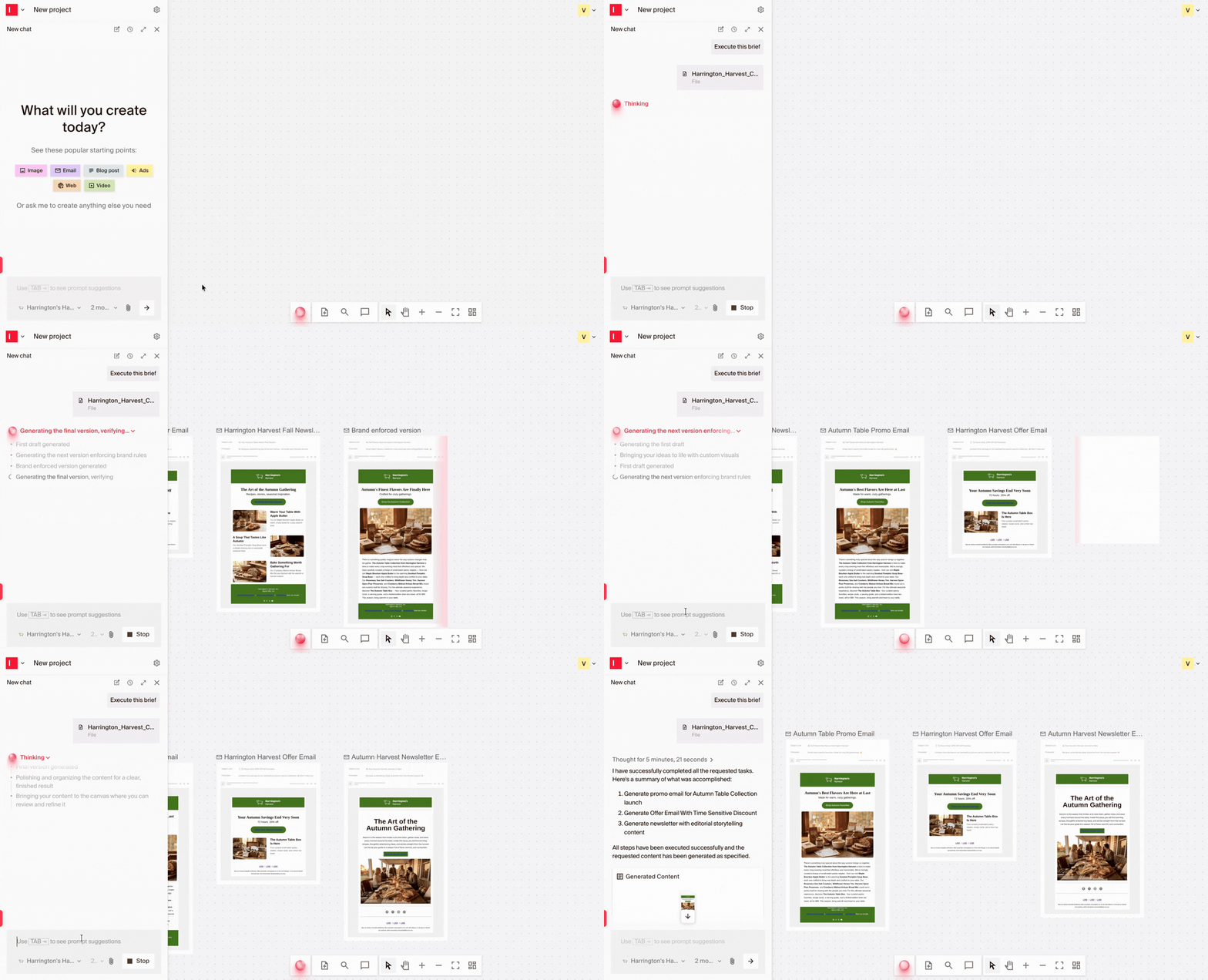
Typeface is a multi-agent platform in which each agent handles a specialized task, and the full team of Arc Agents creates email, social media, ad, and web (landing pages, blogs) assets using third-party models. Agents work in parallel to generate text, image, or video as each individual asset needs, pulling brand intelligence (from Arc Graph) and working off campaign-specific materials.
Marketing, creative, and IT teams work from one connected platform
Your marketing and creative teams bring the campaign lifecycle inside Typeface, keeping their existing workflows and using the tools they already use. Here’s a quick look at how multimodal content generation takes shape in the platform:
Prepare your brand data for multimodal generation
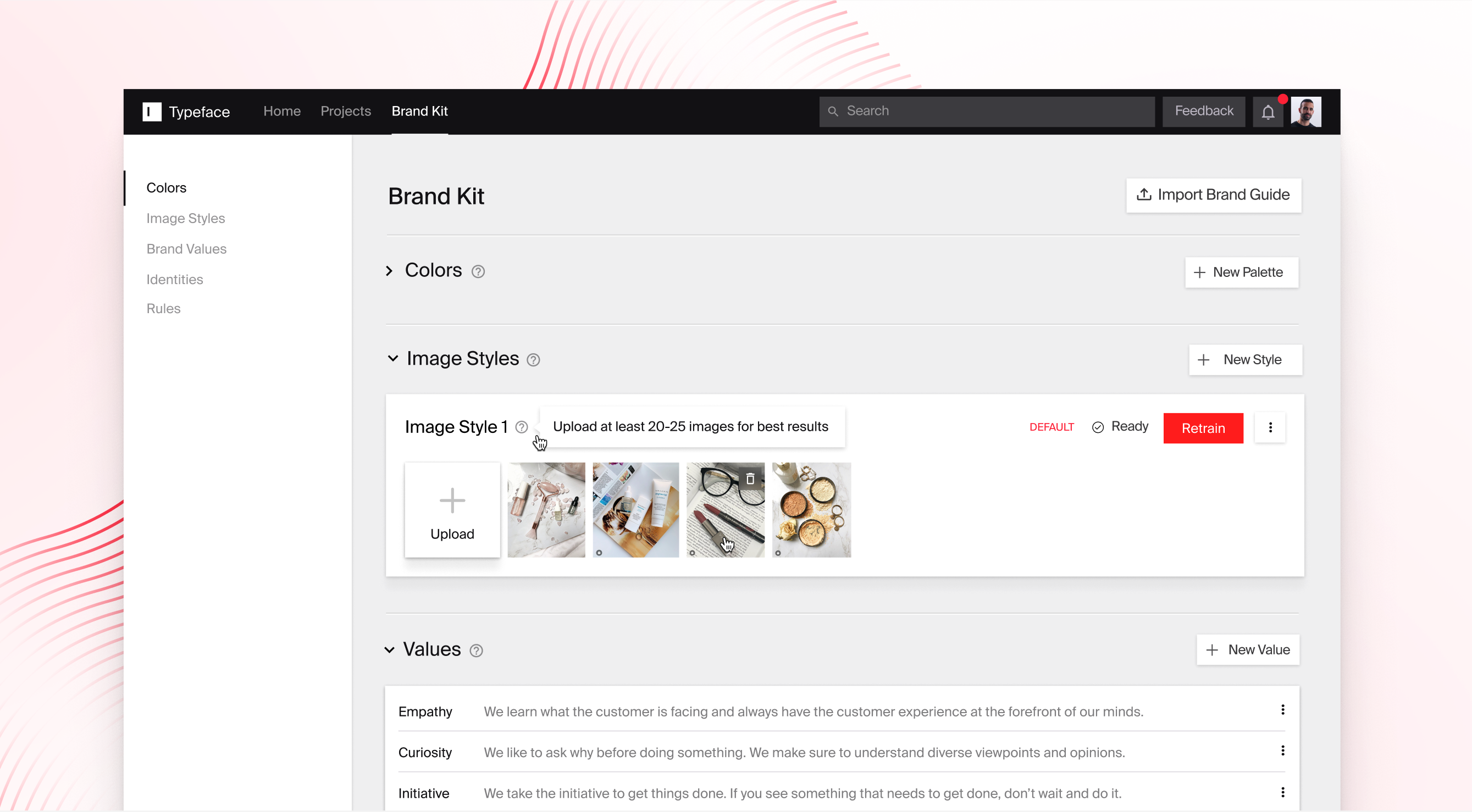
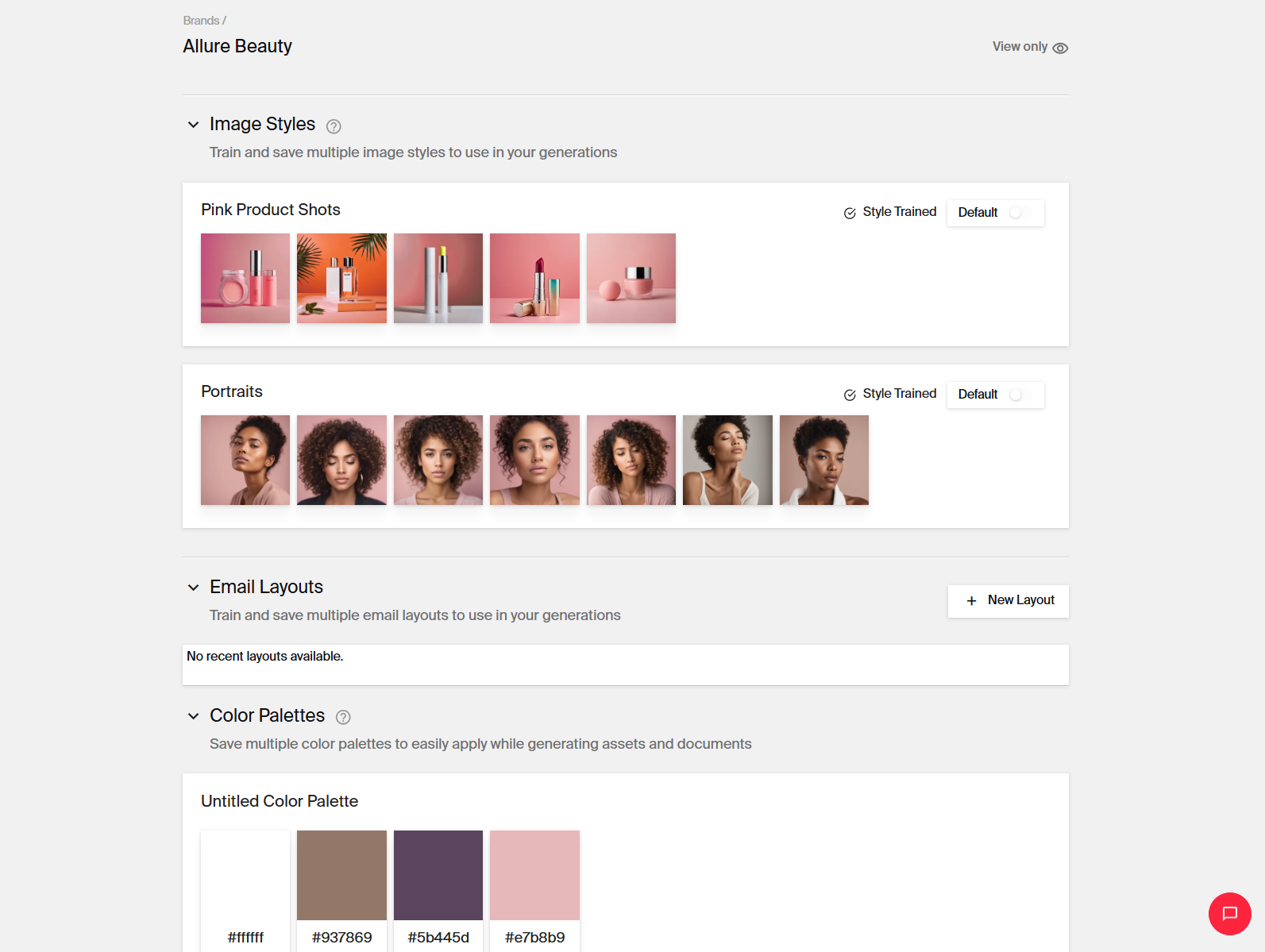
Before anything, upload your style guides, audiences, image and video assets, and grounding data. Arc Graph automatically extracts them.
Getting multimodal generation right means ensuring agents are trained in your image styles and channel-specific tones. In Typeface, this is as simple as uploading 10-15 JPG or PNG images showing a particular style, texture, or composition, and within an hour or so, training is complete. Do the same for tones, sharing samples that best reflect the tone you use for a particular channel.
Agents generate copy, images, and video within your existing layouts for channels. Use native integrations to bring layouts into Typeface for clean multimodal generations. For example, pull web, email, and ad layouts from Figma, and our AI agents will automatically identify the sections to generate perfectly sized, on-brand text and correctly cropped matching visuals within them.
Create campaign assets in Typeface
Once you’re set, create in Arc Spaces, a collaborative workspace that has everything you and agents need to execute campaigns: style guides, product images, layouts, trained tones, and more. Campaigns set into motion with simple prompts and the required context. Assets are generated in a canvas, and the workflows you set up now keep them moving to the next steps until they’re ready to publish.
A few more things to know:
You can still use your favorite AI content generators for specific tasks without losing context across Typeface and those tools. This is thanks to Typeface model context protocol (MCP), which ensures your brand and project contexts travel securely to other tools. You can complete tasks across tools without worrying about losing brand context or leaking sensitive information.
Beyond MCP, Typeface supports a host of other integrations, including APIs, web hooks, and out-of-the-box connectors. Use them to import brand data and publish content directly to your social platforms and CMS. Agents also use them to call on external tools, such as searching pages in Notion.
Expand multimodal AI to more use cases
When you’re ready to expand other use cases, the brand foundation and integration suite help your IT team build repeatable workflows for image, video, and text generation. Your existing marketing stack still works and you get to choose the foundation models you want for each task, across OpenAI, Anthropic, Cohere, Google, and others.
Try multimodal generation in Typeface
Turn a single campaign idea into multi-format assets while keeping your brand at the center. Get a demo to see how Typeface pairs speed with brand safety.
Frequently asked questions
Q. How is multimodal AI different from generative AI?
Generative AI creates new content. Multimodal AI works across multiple content types and combines information from different modalities during content creation. A single brief can generate a blog post, a landing page, a set of social graphics, and a video ad, all in the same voice and to the same visual standards.
Q: Does multimodal content marketing mean creating everything at once?
No. It means having the option to create everything from the same brief, not that every piece needs every format. A campaign might still lead with a blog post and add video only where it earns its place.
Q: What should marketing teams look for in a multimodal AI marketing platform?
Look for a platform that generates text, images, and video from a single shared brief. It should ground every output in your brand guidelines, product documentation, and messaging rules while fitting into your existing workflows. Typeface checks all of these boxes.
Related articles
November 7, 2025
An image can do what a thousand words can’t - In a single glance, it conveys emotion, story, and brand identity. But here's the problem: You spark an idea, brief the designer, and wait. They’re swamp
August 12, 2026
Welcome back to Feature Focus. July's updates are about making the work your team has already done go further: your brand guidelines, your approved email creative, and the web content you've been pub
August 11, 2026
Your demand gen team just wrapped a 90-minute webinar. You’ve uploaded the recording and posted the slides, but that’s it. No follow-up social posts, no email recap, no blog pulling out the best momen